Epoxy floor coating with flakes — also called flake epoxy floor or vinyl flake epoxy — is consistently the most requested residential garage floor system in the Greater Toronto Area. The combination of decorative appeal, practical performance, and reasonable cost has made it the default choice for homeowners upgrading from bare or painted concrete. This guide explains exactly what flake epoxy flooring is, how it's applied, what it delivers, and how to choose the right system for your space.
What Are Epoxy Flakes? (The Basics)
Epoxy flakes — also called vinyl chips, colour chips, or decorative flakes — are small pieces of coloured acrylic or vinyl material, typically ranging from 1/8 inch to 1 inch in size. They are available in a wide range of colours and come pre-blended in palette combinations, from neutral greys and tans to bold blues, greens, and custom mixes.
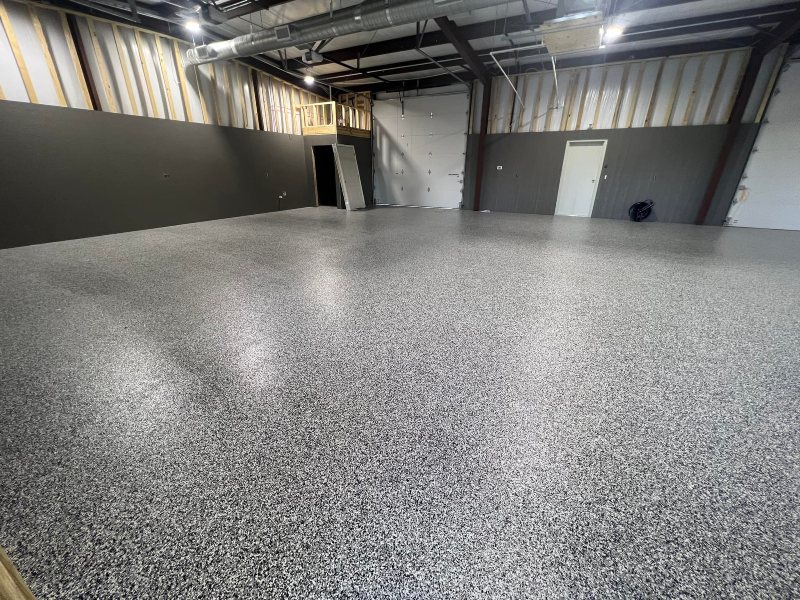
The flakes themselves serve multiple functions in a floor coating system. First, they provide decoration — a broadcast flake floor hides surface imperfections in the concrete below far better than a solid colour system. Second, they create texture — a full-broadcast flake surface has a fine, slip-resistant profile that provides traction in wet conditions. Third, they add depth — a well-applied flake floor has a visual dimensionality that solid colours cannot replicate. Looking at a full-broadcast flake floor at floor level is somewhat like looking at granite — multi-tonal, varied, and visually rich.
How a Full-Broadcast Flake System Is Applied
A professional full-broadcast vinyl flake epoxy installation follows a specific sequence that each step builds on. Skipping or rushing any step compromises the finished system.
- 01Surface preparation: Diamond grinding or shot-blasting to open the concrete profile to CSP 3–4. All cracks are filled, spalls repaired, and the floor vacuumed clean. A moisture test is run to determine primer specification.
- 02Primer coat: A penetrating epoxy primer applied at 4–8 mils wet. On high-moisture slabs, a moisture-mitigating primer is used. The primer is allowed to become tacky but not fully cured — timing depends on temperature and humidity.
- 03Base coat application: 100% solids coloured epoxy applied at 15–20 mils using a notched squeegee and back-rolled with a phenolic roller. The colour of the base coat is typically chosen to complement the flake blend.
- 04Flake broadcast: While the base coat is still wet, decorative epoxy flakes are broadcast by hand or mechanical spreader at a rate designed to achieve full coverage rejection broadcast. This means flakes continue to be thrown until the surface stops accepting more — guaranteeing 100% coverage with no epoxy base coat visible between chips.
- 05Knock-down and vacuum: Once the base coat cures, any raised or standing flakes are scraped flat with a floor scraper and the excess flake is vacuumed away, leaving a smooth, even flake-embedded surface.
- 06Polyaspartic topcoat: The topcoat is applied at 10–15 mils over the prepared flake surface, encapsulating the flakes and creating the final wear surface. Two coats of topcoat are sometimes applied for additional thickness and protection in high-traffic areas.
Performance Benefits Beyond Just Looks
The decorative appeal of flake epoxy floors is obvious, but the system's performance characteristics are equally compelling for Ontario garage applications.
- —Hide factor: A full-broadcast flake floor is far more forgiving of minor concrete surface irregularities than a solid colour system. Surface porosity, small imperfections, and minor colour variations in the concrete are completely obscured by the flake layer. This is practically important because most Ontario residential garage slabs have some surface variation.
- —Slip resistance: The texture from the broadcast flake layer provides a non-slip surface without the need for additional anti-slip additives. This is a meaningful safety benefit in a garage environment where tracked-in water, snow, and ice are regular occurrences.
- —Scratch and scuff visibility: Minor scratches and scuffs that would be highly visible on a solid-colour floor are effectively invisible on a multi-colour flake surface. This is a major practical advantage in daily-use residential garages.
- —UV performance: The combination of coloured flakes and an aliphatic polyaspartic topcoat is highly UV stable. The flake colour comes from pigmented acrylic, not from epoxy resin, so it does not yellow. The topcoat protects the entire system from UV-driven degradation.
- —Road salt and moisture resistance: The combination of properly adhered epoxy base, embedded flake layer, and polyaspartic topcoat creates a multi-barrier system against salt brine and moisture intrusion.
Flake vs Solid Colour vs Metallic: Which System Wins?
The three main decorative epoxy floor systems each have a different optimal use case:
Full-broadcast flake epoxy wins for: residential garages, basements used for storage or utility purposes, commercial warehouses and retail spaces, anywhere that daily-use durability and low visibility of wear are priorities. The flake broadcast hides imperfections, the texture provides traction, and the system is forgiving of normal residential use. It is also the most cost-effective system per square foot for the performance it delivers.
Solid colour epoxy wins for: workshops requiring a clean, clinical appearance, commercial environments where appearance consistency is important, floors that will be marked with safety lines or demarcation colours. Solid colour floors show wear more visibly over time but can be easily topcoated when they show surface fatigue.
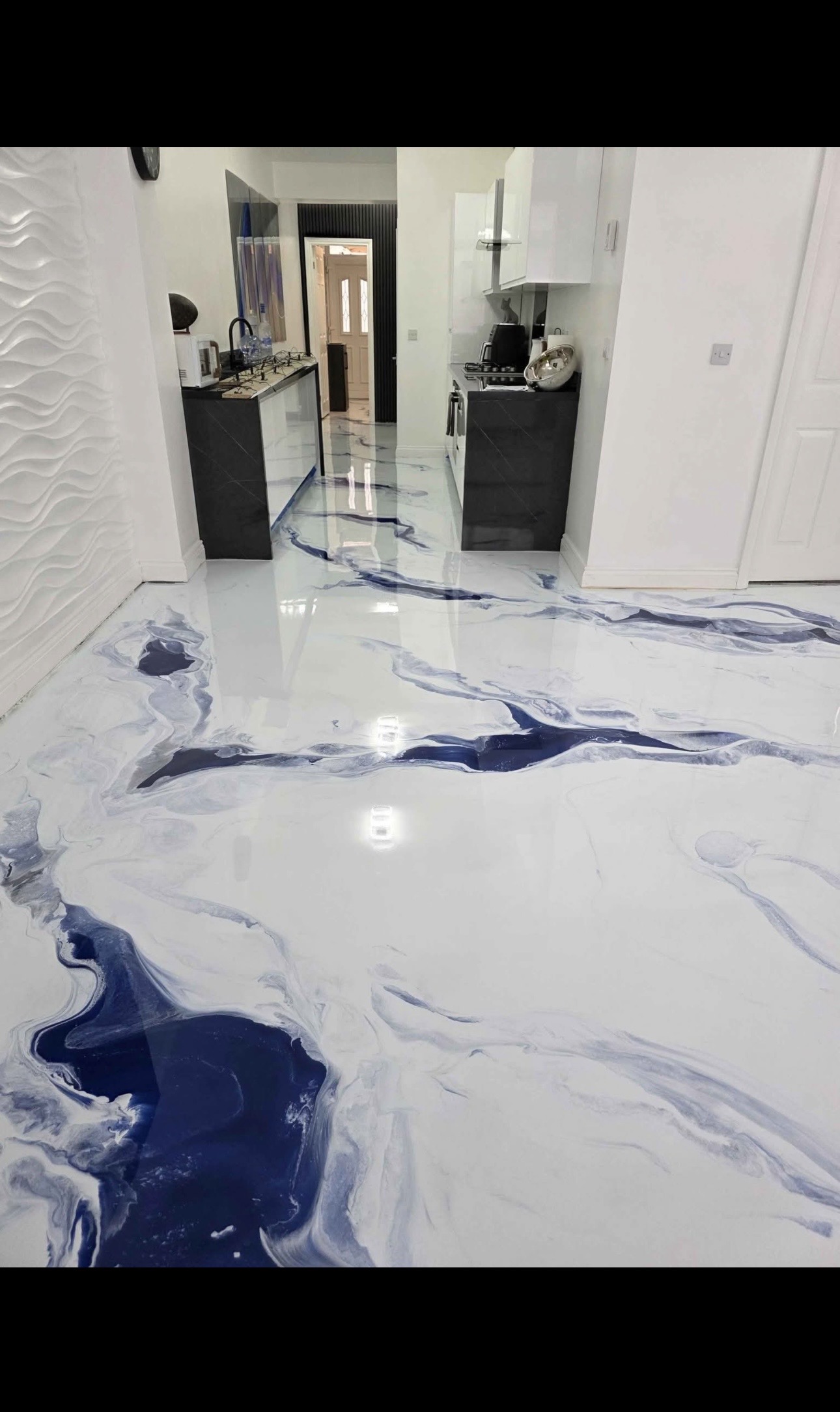
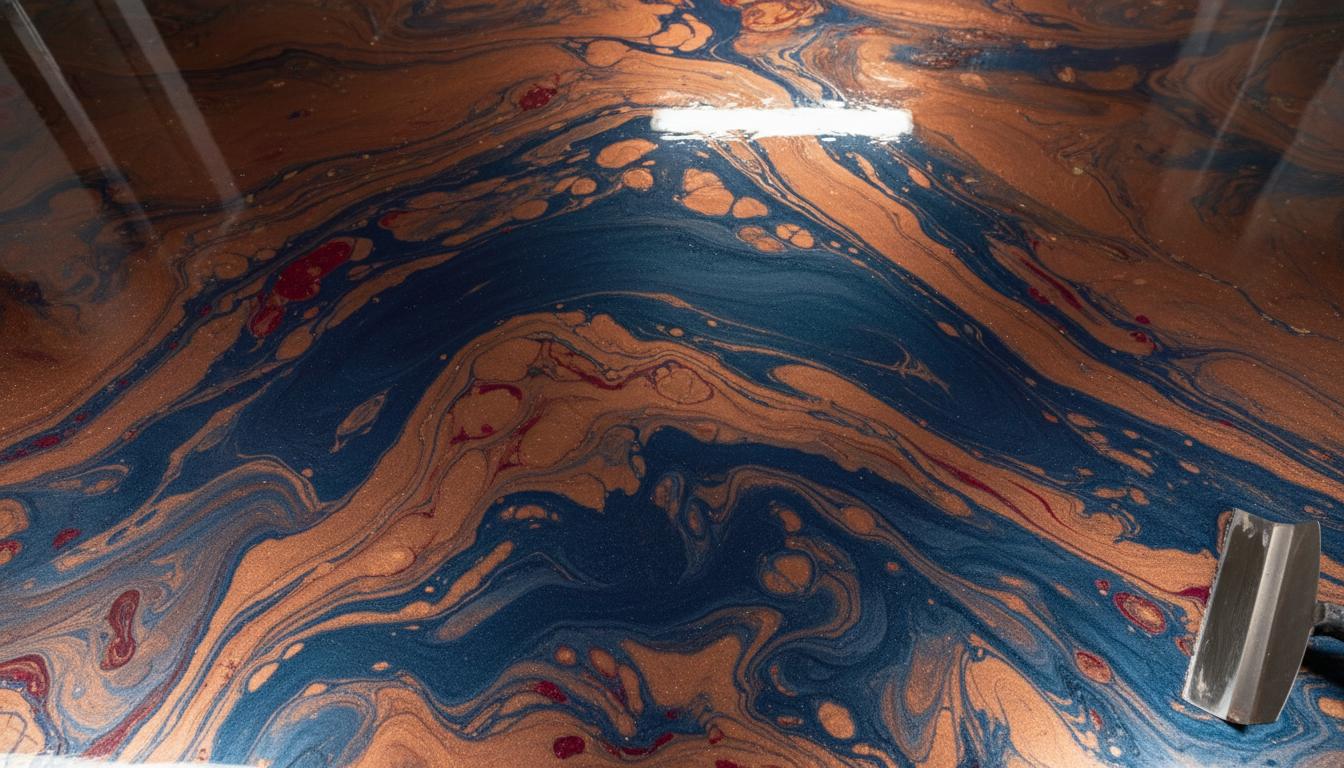
Metallic epoxy wins for: finished residential garages intended as showrooms or entertainment spaces, high-end retail, restaurants, and any space where the floor is a design feature rather than just a functional surface. The cost is higher, the installation requires more skill, and the floor requires slightly more careful maintenance to preserve the appearance, but the visual impact is unmatched by any other floor coating system.
How to Choose Your Flake Colour and Chip Size
Flake colour selection is the most personalised part of a flake epoxy floor project. Most installers offer 20–40 pre-blended colour combinations, and many can create custom blends from stock colours on request.
Practically speaking, neutrals — blends of grey, black, white, and tan — are by far the most popular choice for Toronto residential garages, and for good reason. They complement almost any wall colour, are universally appealing at resale, and hide dirt and tire marks better than lighter single-tone blends. The classic "granite blend" of grey and black is the most installed flake combination in the GTA by a significant margin.
Chip size affects both appearance and texture. Smaller chips (1/8 inch) create a finer, more uniform texture with a denser visual pattern. Larger chips (3/4 inch or 1 inch) create a bolder, more dimensional look with more visible individual flake shapes. For residential garages, 1/4 inch chips are the most common choice — fine enough to look polished, coarse enough to provide texture.
Ask your installer for physical colour samples or photos of installed jobs in the colour blend you're considering. Digital photos and swatches on a phone screen are a poor substitute for seeing a sample under your actual garage lighting conditions. Most reputable contractors will bring a chip board to your site consultation.
Is Flake Epoxy Right for Your Space? (Garage, Basement, Commercial)
Epoxy floor coating with flakes is versatile enough to work well across multiple space types, but there are nuances:
Residential garages: The optimal use case. Full-broadcast flake with a polyaspartic topcoat is purpose-built for the demands of an Ontario residential garage — road salt, tire traffic, freeze-thaw exposure, and the need for an attractive finish that holds up over years of daily use.
Basements: Flake epoxy works very well in below-grade residential spaces. The primary consideration is moisture — below-grade slabs in Ontario can have elevated moisture vapour emission, particularly in spring. A proper moisture test and vapour-barrier primer are essential. Otherwise, the system performs identically to above-grade applications.
Commercial spaces: Full-broadcast flake is popular in auto dealerships, retail stores, restaurants, and fitness facilities. In higher-traffic commercial applications, two coats of polyaspartic topcoat (rather than one) provide additional abrasion resistance and extend the time between recoating cycles.
FAQ
How long does a flake epoxy floor take to install?
A standard two-car residential garage takes one to two days. Day one covers surface preparation, primer, and base coat with flake broadcast. Day two (after overnight cure) covers knock-down, vacuum, and polyaspartic topcoat application. The floor is ready for light foot traffic 12–24 hours after the topcoat and for vehicle traffic after 72 hours.
Can you add more flakes to an existing epoxy floor?
Not easily. Adding flakes requires a wet base coat to embed them in. To add flakes to an existing floor, the surface needs to be abraded to create a profile, an epoxy tie coat applied, flakes broadcast into the wet tie coat, and then a new topcoat applied over the result. It's a multi-step process but sometimes the right choice for refreshing an older solid-colour floor.
Pure Coatings Epoxy
GTA Epoxy & Concrete Flooring — Est. 2024