The polyaspartic versus epoxy debate comes up in nearly every garage floor consultation we run in the GTA. Marketing from some contractors presents them as competing systems — pick one or the other. The reality is more nuanced and, frankly, more useful to understand: they have different chemistry, different performance profiles, and they are almost always better used together than in isolation. This guide gives you the information to make an intelligent decision.
What Is Polyaspartic Coating? (And How Is It Different From Epoxy?)
Polyaspartic flooring is a type of polyurea coating — a fast-curing, aliphatic (UV-stable) chemistry that was originally developed for industrial pipeline and tank linings. It was adapted for floor coatings in the early 2000s when formulators discovered that adjusting the reaction speed and viscosity created a product that could be applied at commercial thickness in a single coat with dramatically shorter cure times than epoxy.
The technical distinction: epoxy is an amine-cured thermosetting resin that reacts at room temperature over 12–72 hours. Polyaspartic is a polyurea variant in which an aliphatic isocyanate reacts with a polyaspartic ester. This reaction can be controlled to cure in as little as one to four hours at room temperature, or slowed for longer working times in hot conditions. The resulting film is harder, more flexible, and more UV-stable than cured epoxy.
The UV stability point deserves emphasis. Epoxy is an aromatic compound that yellows and chalks under UV exposure — sometimes visibly within one summer season when used as a topcoat in a south-facing or glass-door garage. Polyaspartic is aliphatic and UV-stable: it maintains its clarity and colour indefinitely under UV exposure. This single property is why polyaspartic topcoats have largely replaced epoxy topcoats in residential garage applications across Ontario.
Head-to-Head Comparison
A side-by-side look at epoxy vs polyaspartic across the metrics that matter most for an Ontario garage floor:
- —Cure time: Epoxy requires 12–24 hours for light foot traffic and up to 72 hours for vehicle traffic. Full chemical cure takes 7 days. Polyaspartic topcoats are walkable in 2–4 hours and accept vehicle traffic in 24 hours. For commercial or quick-turnaround projects, polyaspartic-only systems can return a floor to service the same day.
- —UV stability: Epoxy yellows and chalks under UV — unacceptable as a visible topcoat in any garage with natural light exposure. Polyaspartic coating is fully UV stable and will not amber or chalk, maintaining a clear, bright appearance indefinitely.
- —Temperature tolerance: Standard epoxy cannot be applied or will cure improperly below 10°C. Polyaspartic chemistry can be applied down to -20°C with appropriate formulation selection. In Ontario, this extends the installation season significantly — a meaningful operational advantage for contractors and homeowners.
- —Chemical resistance: Both systems offer excellent resistance to automotive fluids, gasoline, motor oil, and road salt brine. Epoxy has a slight edge in alkaline resistance; polyaspartic edges ahead in acid and solvent resistance. For residential garage use, the difference is negligible.
- —Cost: Epoxy midcoat material costs are lower than polyaspartic per litre of cured film. However, polyaspartic's faster cure time reduces labour cost. In practice, a hybrid system (epoxy base + polyaspartic top) typically costs 10–20% more than an all-epoxy system and significantly less than a pure polyaspartic system.
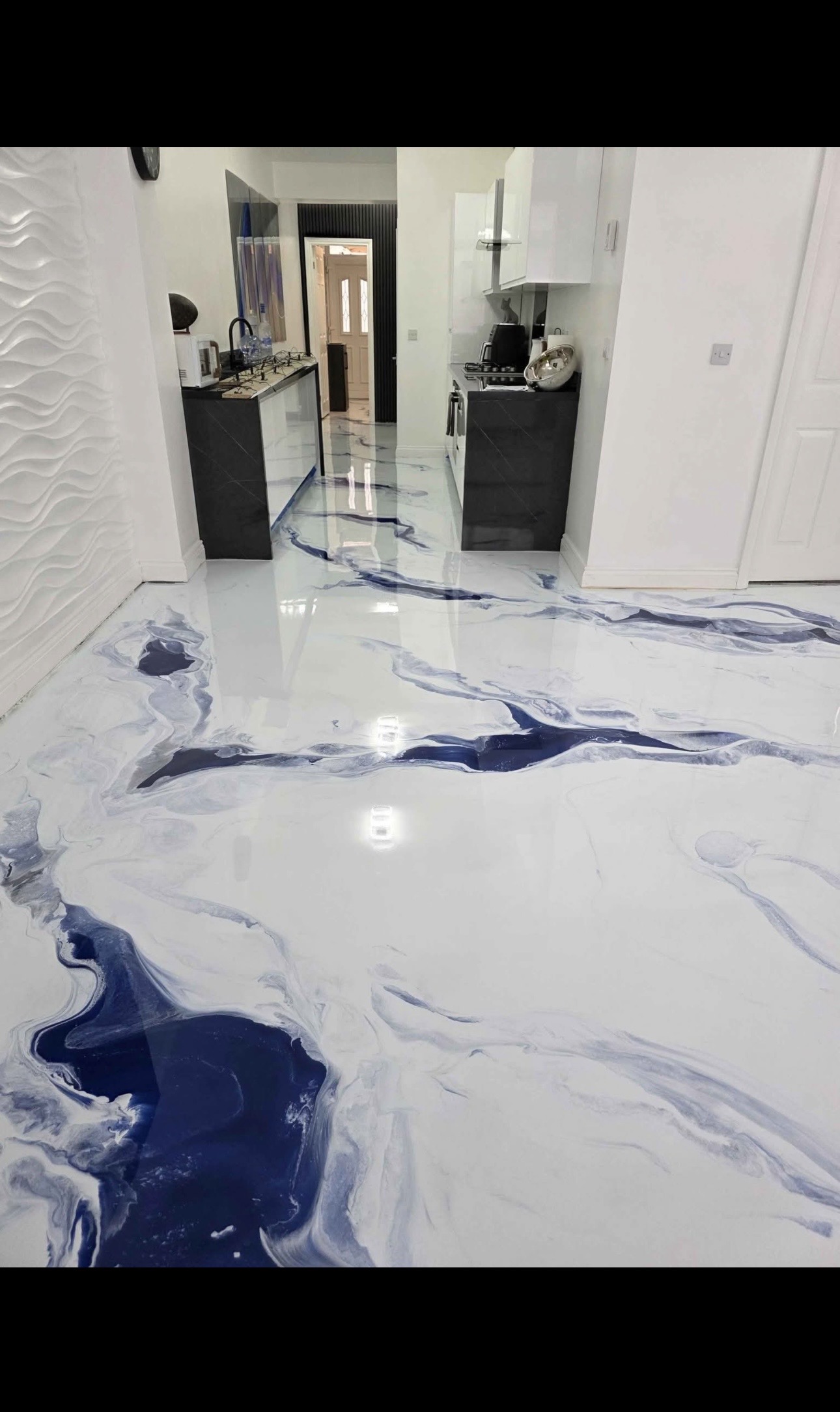
- —Appearance options: Both systems support solid colours, broadcast flakes, and metallic pigments. Polyaspartic's faster cure means colour transitions and multi-zone designs require more planning. Epoxy's longer open time makes complex decorative work — like metallic swirl patterns — more manageable.
Why Ontario Garages Specifically Benefit From Polyaspartic Topcoats
The Ontario climate creates three specific stressors that make polyaspartic flooring the preferred topcoat choice over standard epoxy or urethane for residential garages:
First, hot tire pickup. Ontario summers bring regular periods of hot weather where asphalt driveways can reach surface temperatures above 60°C. A vehicle parked after a highway drive arrives with tires that are extremely hot. Standard epoxy softens above 65–70°C; polyaspartic topcoats are formulated with higher heat deflection temperatures (typically above 90°C), making them significantly more resistant to hot tire adhesion. This is one of the most common epoxy failure modes in Ontario residential garages.
Second, UV exposure. Many Ontario garages have south-facing doors or windows that admit direct sunlight for hours daily. Without UV stability in the topcoat, these areas yellow noticeably within one to two summers. A polyaspartic aliphatic topcoat eliminates this concern entirely.
Third, thermal shock from road salt introduction. When a vehicle loaded with road salt brine drives into a garage on a cold day, the slab experiences sudden temperature and chemical exposure simultaneously. Polyaspartic's greater flexibility (higher elongation at break than rigid epoxy) means the coating absorbs micro-thermal stresses without cracking or delaminating.
The Hybrid System: Why We Pair Epoxy Base + Polyaspartic Top
The performance-optimised approach for Ontario residential garages is a hybrid system: a 100% solids epoxy base and midcoat for film build, penetration depth, and cost efficiency, with a polyaspartic aliphatic topcoat for UV stability, heat resistance, and abrasion performance. This is not a compromise — it's the approach recommended by every major coating manufacturer's technical data.
The logic is straightforward. Epoxy excels as a penetrating primer and build coat: its low viscosity allows deep penetration into open-profile concrete, its chemistry provides strong mechanical adhesion, and 100% solids formulations build substantial film thickness economically. But epoxy's aromatic chemistry makes it fundamentally unsuitable as a UV-exposed topcoat.
Polyaspartic topcoats, conversely, are not ideal as primers or build coats. Their fast cure limits penetration time into concrete; their higher material cost makes using them for film build uneconomical. But as a 10–15 mil topcoat over a properly prepared epoxy base, polyaspartic delivers everything the project needs: UV stability, heat resistance, abrasion resistance, and a gloss or matte finish that maintains its appearance for years.
When to Choose Pure Epoxy (Commercial & Industrial Use Cases)
Pure epoxy systems — without polyaspartic topcoats — remain appropriate in specific commercial and industrial scenarios where UV exposure is limited and other performance priorities dominate.
- —Interior warehouse and manufacturing facilities: No UV exposure, high chemical resistance requirements, budget constraints that favour epoxy material economics. A high-build 100% solids epoxy floor with an epoxy sealer is suitable for most light to medium industrial applications.
- —Food service and pharmaceutical environments: Heavy sanitization with strong alkaline or acidic cleaners favours epoxy chemistry in some formulations. Consult manufacturer chemical resistance data for your specific cleaning agents.
- —Broadcast anti-slip systems: In wet commercial environments (car washes, loading docks), polyurethane aggregate broadcast into a thick epoxy base creates a highly textured surface with excellent slip resistance.
- —Budget-constrained commercial projects: When first cost is the dominant constraint and UV exposure is not a factor, an all-epoxy system at lower material cost may be appropriate.
Cost Difference in 2026 (GTA Pricing)
Based on current GTA market pricing for professionally installed systems on a standard two-car garage (approximately 500–600 square feet):
- —Single-coat water-borne epoxy (DIY-grade, contractor applied): $2.50–$3.50/sq ft. Not recommended for Ontario residential garages — lacks the film thickness and UV stability for long-term performance.
- —Two-coat 100% solids epoxy with epoxy sealer: $4.00–$5.50/sq ft. Adequate for interior applications without UV exposure. Will yellow in any garage with natural light.
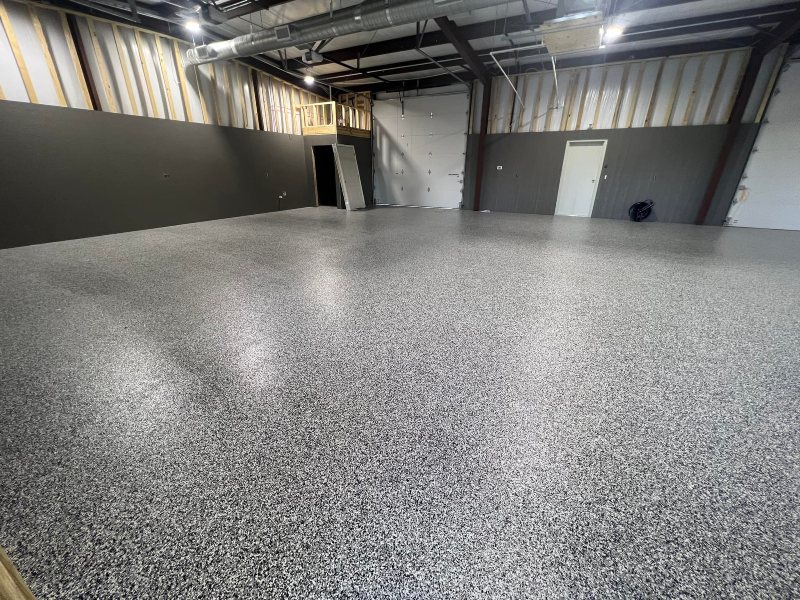
- —Full-broadcast flake system, epoxy base + polyaspartic topcoat: $5.00–$7.00/sq ft. The recommended residential garage specification. Best lifespan-to-cost ratio over a 10–20 year horizon.
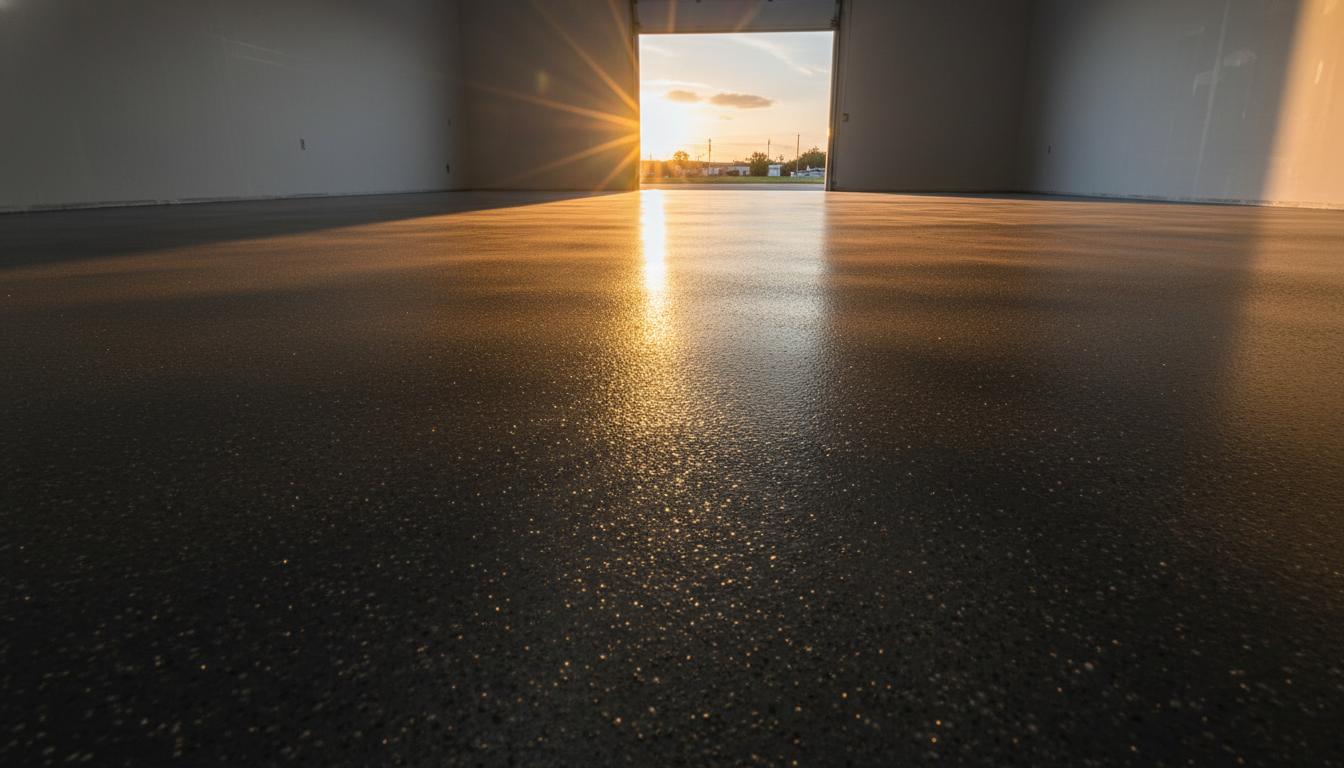
- —Pure polyaspartic system (single-day installation): $7.00–$10.00/sq ft. Justified when same-day return to service is critical (commercial, rental properties). Higher first cost, comparable long-term performance to hybrid system.
- —Metallic epoxy with polyaspartic topcoat: $9.00–$14.00/sq ft. Premium decorative system for finished garages, basements, and showrooms.
These ranges reflect installed costs including surface preparation, materials, and labour. Material-only costs are substantially lower but do not account for the equipment (grinders, shot-blasters) and skill required for a long-lasting installation.
FAQ
Is polyaspartic coating the same as polyurea?
Polyaspartic is a sub-category of polyurea chemistry. All polyaspartic coatings are polyurea coatings, but not all polyurea coatings are polyaspartic. Pure polyurea (isocyanate + amine) cures in seconds and requires spray application at high temperatures — typically used for waterproofing and truck-bed liners. Polyaspartic coatings modify this chemistry for slower, controllable cure times suitable for floor coating application by roller or squeegee.
Can polyaspartic be applied over existing epoxy?
Yes, in most cases. If an existing epoxy floor is structurally sound and well-adhered, it can be lightly sanded to create a mechanical profile, then overcoated with a polyaspartic topcoat. This is a common and cost-effective way to refresh an older epoxy floor and add UV stability without a full removal and reinstallation.
Pure Coatings Epoxy
GTA Epoxy & Concrete Flooring — Est. 2024