
The global epoxy flooring market tells you something important before you even pick up the phone. The epoxy floor coating market was valued at $2.43 billion in 2024 and is projected to reach $3.72 billion by 2032, growing at a CAGR of 5.50%. That kind of sustained growth means more installers are entering the market every year, which is great for choice but harder on quality control. Finding the right epoxy floor installer near you requires more than a quick Google search and the lowest quote.
Whether you're upgrading a residential garage, finishing a basement, or searching for commercial epoxy floor installers to coat an entire facility, the process of vetting a contractor is largely the same. The decisions you make in the first hour of research will determine whether your floor looks great for two decades or starts peeling within two years.
Key Takeaways
- Cost benchmarks matter: Professional epoxy flooring installation costs $2 to $12 per square foot for your garage or concrete surface, including materials and labor. If a quote falls well below that range, ask exactly what has been cut from the scope.
- Lifespan depends on installation quality: A professional ensures your floor lasts 10 to 20 years with proper surface preparation and installation. A cheap install that fails in year three is far more expensive than a quality one that holds for 15.
- Surface prep is the whole ballgame: Concrete evaluation, testing moisture levels, identifying cracks, and surface preparation accounts for 70% to 80% of a successful installation. Ask every contractor exactly how they prepare the slab before you agree to anything.
- Licensing and insurance are non-negotiable: A licensed contractor demonstrates compliance with industry standards and regulations, while insurance protects you and the contractor in case of accidents or property damage. Without these, you could be financially liable for unforeseen issues.
- Commercial projects carry higher stakes: Commercial epoxy floor cost for spaces such as shops and offices can range from $6 to $12 per square foot due to traffic and custom design requirements. Budget accordingly and match your installer's track record to the scale of your project.
Quick-Start Prioritization Framework
| Project Type | Best Approach | Effort to Vet | Time to Results |
|---|---|---|---|
| Residential garage | Local specialist with flake or polyaspartic system | Low | 1 to 2 days install |
| Basement or living area | Installer with moisture testing experience | Medium | 2 to 3 days install |
| Small retail or office | Commercial epoxy floor installers with portfolio | Medium | 3 to 5 days install |
| Warehouse or industrial | Specialist with shot-blasting capability | High | 1 to 2 weeks |
| Decorative or metallic finish | Experienced decorative coating contractor | High | 2 to 4 days install |
Start here if you are:
- A homeowner with a single garage: Request three quotes from local specialists, confirm diamond grinding is included, and check Google reviews before committing.
- A small business owner: Prioritize commercial epoxy floor installers with documented commercial references. Ask specifically about cure schedules and business downtime.
- Managing a large facility: Work only with contractors who carry full commercial liability insurance, have shot-blasting equipment, and can provide proof of industrial project completions.
What Epoxy Flooring Actually Costs in 2026
Understanding the cost range before you call a single contractor is one of the smartest things you can do. It stops lowball bids from looking attractive and overpriced quotes from going unchallenged.
Residential Pricing
In 2026, most epoxy flooring projects fall into these broad ranges: professional install typically runs $4 to $12 per square foot, while DIY materials run $2 to $5 per square foot, not including tools and prep. If you are looking at a two-car garage, an epoxy floor costs $1,600 to $5,800 for a standard two-car garage. That is a wide swing, and the difference comes almost entirely from the depth of preparation and the quality of the coating system.
Finish Type Drives Price
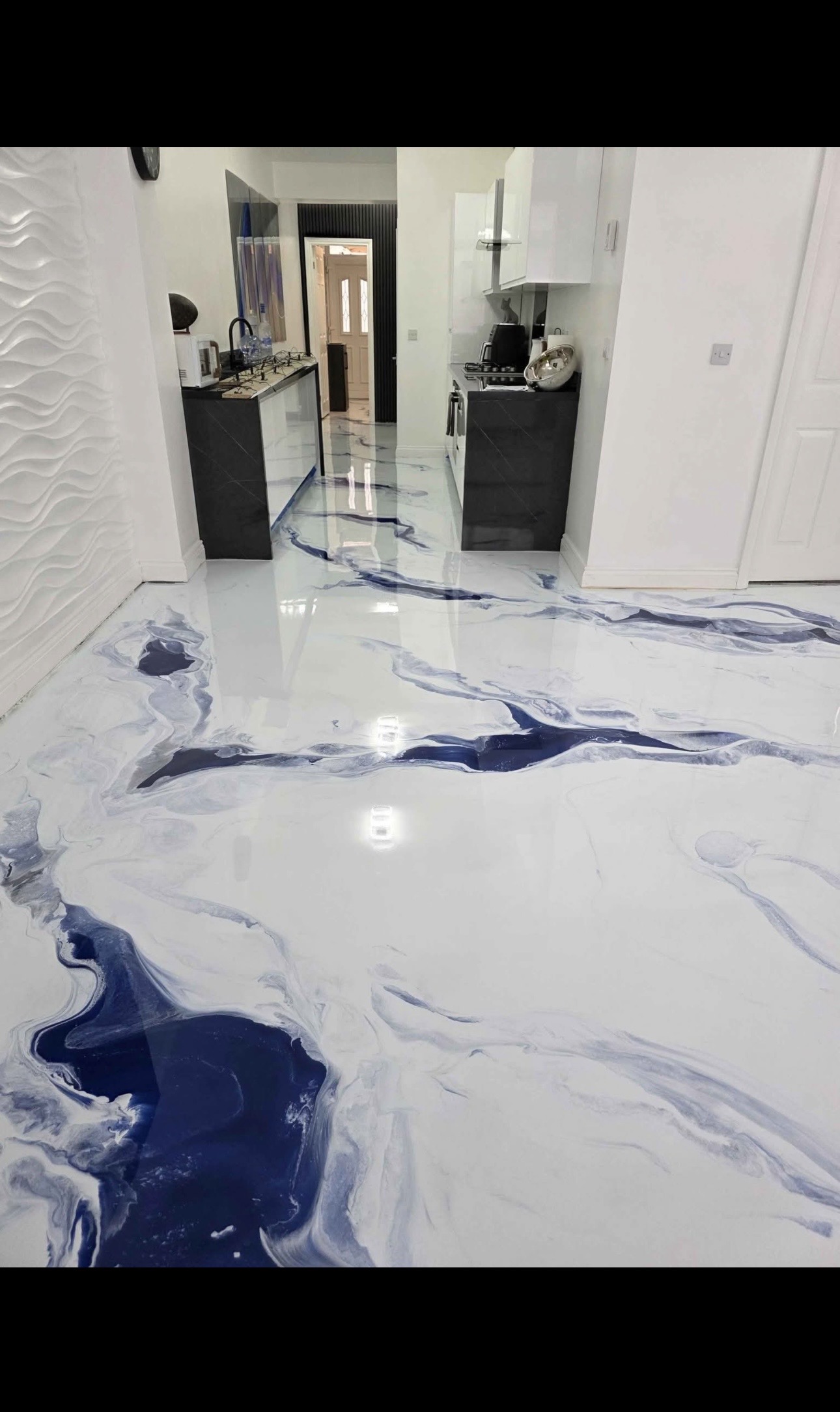
The finish you choose matters more than most homeowners realize. Basic solid-color epoxy coatings range from $3 to $7 per square foot. Decorative options, like adding flakes or chips, increase costs to $5 to $12 per square foot. High-end finishes such as metallic epoxy cost between $8 and $15 per square foot and require professional installation. Therefore: match your finish budget to your space's actual use. A decorative metallic floor in a working garage with heavy vehicles will wear faster than a flake system designed for that environment.
Commercial Pricing
Industrial spaces such as warehouses and factories require stronger coatings. The industrial epoxy floor coating cost is usually $8 to $15 per square foot. Outdoor areas requiring UV protection typically cost $7 to $13 per square foot. For commercial epoxy floor installers, always request itemized quotes that separate labor, materials, surface preparation, and topcoat.
Pro Tip: A written quote should include the surface prep method, coating layers, product type, repair scope, approximate thickness, topcoat, cure schedule, and warranty exclusions. If a quote does not contain all of those line items, ask for a revised one before you proceed.

How to Vet Epoxy Floor Installers Near You
Start With Specialization, Not Price
Look for contractors who specialize in epoxy and resinous coatings, not general painters or handymen who offer epoxy as a side service. Ask how many epoxy floors they have installed in the past year and what types, whether garage, commercial, or decorative. A contractor who does five epoxy floors a year alongside painting, deck work, and landscaping lacks the depth of daily practice that a specialist builds.
In my experience, the fastest way to screen a contractor is to ask one specific question: "What grinder do you use for surface prep?" A knowledgeable installer will give you a direct answer about their equipment. Vague answers signal inexperience.
Verify Licensing and Insurance
Before working with an epoxy floor contractor, you need to ensure they are both licensed and insured. Contractors must have contractor's licenses to install concrete flooring, and you can request and look up the license number online to verify it. This step takes five minutes and protects you from significant financial exposure. Request copies of their current license and liability insurance certificates, then verify these documents directly with the issuing agencies. Ask specifically about workers' compensation coverage to protect yourself if someone gets injured during installation.
Check Reviews Methodically
Nothing is more reliable than online reviews, as long as the company has at least 100. This is probably the single best thing to happen for customers when evaluating a contractor. Look beyond the star rating. Read the one- and two-star reviews specifically, and see how the company responds. A contractor who dismisses or ignores complaints is a warning sign. One who acknowledges and resolves them demonstrates accountability.
Pro Tip: A reputable epoxy flooring company will gladly provide references and showcase their portfolio. Most reputable businesses will have glowing reviews and testimonials they will be more than happy to share with potential new customers. If a company is reluctant to provide references, walk away.
Understand the Red Flags
Do not go for the cheapest option. That is your first red flag. Stay away from "Lifetime Warranties," as no manufacturers offer this. Other warning signs include no mention of moisture testing in the quote, vague descriptions of surface preparation, no physical address or fixed business presence, and pressure to sign the same day.
Common red flags in a completed floor include peeling (often caused by poor surface prep or moisture trapped beneath the coating) and blistering (caused by improper mixing, overly porous concrete, or rushed application). Both of these failures are entirely preventable with proper installation practice.
Why Surface Preparation Determines Everything
Most homeowners focus their questions on color options and price, while the detail that actually determines long-term performance is the preparation of the concrete slab underneath. Ask every contractor about this before you discuss anything else.
Diamond Grinding vs. Acid Etching
Diamond grinding is the gold standard for surface preparation. Acid etching is cheaper but creates an inconsistent profile and can leave chemical residue. If a contractor plans to acid etch your floor, consider it a yellow flag. It is acceptable for small residential jobs but insufficient for high-performance systems.
Grinding removes the thin concrete laitance coat, opening up the pores of the concrete and allowing the epoxy to penetrate deeper into the substrate. This improves both the mechanical and chemical bond between the epoxy and the concrete, resulting in a stronger and more durable coating. For commercial epoxy floor installers handling large spaces, shot blasting is often used alongside diamond grinding on heavily worn or contaminated slabs.
Moisture Testing
Epoxy adheres by bonding chemically and mechanically to concrete. If the surface is not clean, rough, and open, the coating will not anchor properly. Skipping or using the wrong prep method often leads to bubbling, peeling, or early failure. Ask your installer whether they conduct a moisture vapor emission test before applying primer. Moisture beneath the slab is a primary cause of coating failure and is non-negotiable to address before any product goes down.
Pro Tip: Professional-grade epoxy systems from reputable suppliers vastly outperform box-store DIY kits. Be wary of contractors using consumer-grade products at professional prices.
Epoxy Flooring Lifespan: What to Realistically Expect
Understanding how long your floor should last helps you evaluate warranty terms and hold contractors accountable.
Residential Lifespans
A residential garage can last 10 to 20 years under light traffic and controlled environments. Driveways exposed to UV and freeze-thaw cycles typically last 5 to 12 years. Commercial retail spaces average 7 to 15 years under moderate foot traffic. Industrial and warehouse floors with heavy machinery and chemicals see 3 to 10 years of service. Therefore: match your system selection and budget to the realistic demands of the space. A basic water-based product in a working mechanic's shop will fail prematurely.
What Extends Lifespan
The lifespan of your epoxy floor depends heavily on preparation and installation quality. Proper concrete preparation ensures good adhesion, multiple coats provide better protection than single-layer systems, and a quality topcoat adds extra defense against wear and UV exposure. Shortcuts in preparation lead to premature failure.
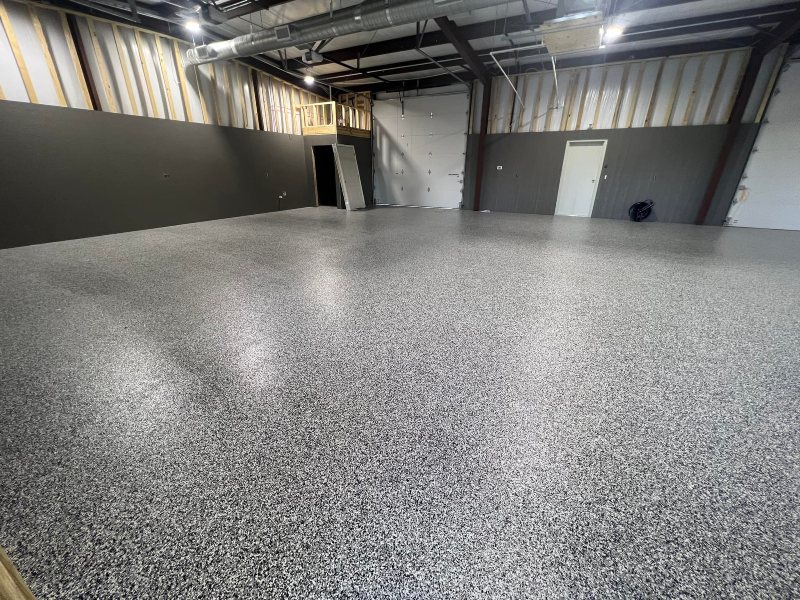
A professionally installed epoxy flake system lasts 15 to 20 years or more, withstanding daily foot traffic, occasional vehicle use, hot tires, oil drips, road salt, and dropped tools when installed correctly. If you are getting a flake or chip system, confirm the contractor uses a full broadcast (covering the entire floor, not a partial scatter) with a UV-stable polyaspartic or polyurethane topcoat.

Commercial Epoxy Floor Installers: Unique Considerations
Commercial jobs carry a different set of requirements compared to residential installs. Commercial facilities such as hotels, restaurants, and stadiums require hard-wearing, durable, and resilient flooring solutions. While polished concrete and urethane cement flooring are options, epoxy flooring is a fitting choice. The benefits of epoxy flooring for commercial use outweigh competing flooring options when comparing chemical and stain resistance and safety.
What Commercial Clients Should Verify
- The installer has completed projects of similar square footage in similar industries
- They carry commercial general liability insurance of at least $2 million
- They provide a documented cure schedule so you can plan your business downtime
- The quote includes a topcoat rated for the specific chemical or mechanical demands of your space
- Getting commercial epoxy flooring right starts with thorough surface preparation. Experts clean and fix the concrete before applying any epoxy coating, ensuring a smooth installation process.
The commercial sector is projected to be the fastest-growing consumer of epoxy flooring resins, with a CAGR of 7.22% during the forecast period. That growth creates competitive pressure on pricing, which can tempt less experienced operators to cut corners on preparation. Ask specifically about moisture testing, crack repair procedures, and the number of coats included in your system.
Teams like Pure Coatings Epoxy are built specifically for clients who need a verifiable installation process, documented warranties, and proven results across both residential and commercial spaces, the kind of transparency that separates a genuine professional from a low-cost generalist.
Common Mistakes to Avoid When Hiring
After years of watching how these decisions play out, the mistakes that cost people the most money are almost always made at the very beginning of the process.
Choosing on Price Alone
The easiest way to lower an epoxy quote is to reduce labor. This often means shorter prep, less repair, thinner build, no primer, or no moisture discussion. Those omissions do not jump out in a finished photo. They show up later as peeling, hot tire pickup, bubbling, staining, or premature wear. A quote that comes in significantly under the field should trigger questions, not celebrations.
Accepting Vague Quotes
A strong quote should read like a scope of work, not a receipt. You should know the plan, products, risks, and exclusions. If your quote says "epoxy flooring, 500 sq ft, $2,200" with nothing else, that is not a quote. That is a deposit request.
Skipping the Portfolio Review
Seeing real results builds trust. A good contractor will proudly show past work and have satisfied client testimonials. Ask to see photos of recently completed floors in spaces similar to yours. A garage specialist showing you warehouse photos, or vice versa, means their experience may not apply to your project.
Ignoring Cure Time
Using the floor too soon stresses the coating before it fully cures. Parking a vehicle after 48 hours when the system requires 72 may not cause immediate failure, but it can weaken the bond and shorten the floor's lifespan. Get the cure schedule in writing and plan accordingly.
Frequently Asked Questions
How do I find reputable epoxy floor installers near me?
Start with Google Maps searches filtered to four stars or higher, with at least 50 reviews. Check the contractor's website for a portfolio of completed projects, confirm they carry liability insurance, and verify their business license number through your local licensing authority. Request three itemized quotes and compare them on scope, not just price. Teams like Pure Coatings Epoxy make it easy to get a detailed, transparent quote upfront.
How much does professional epoxy flooring cost in 2026?
In 2026, prices typically range between $5 and $12 per square foot as customization options and demand continue to expand. Residential garages generally fall in the $4 to $8 range for standard systems, while metallic and decorative finishes push toward $10 to $15. Commercial and industrial spaces cost more due to higher-grade coatings and more intensive surface preparation requirements.
What is the difference between residential and commercial epoxy floor installers?
Commercial epoxy floor installers handle larger floor areas, more demanding traffic conditions, and stricter safety requirements. Commercial epoxy systems are renowned for their superior properties, including exceptional abrasion resistance, ease of maintenance, and a seamless finish that prevents dust and bacterial accumulation. Key product types include self-leveling epoxy flooring, epoxy mortar systems, and anti-static epoxy flooring, catering to specialized environments like data centers, pharmaceutical clean rooms, and food processing plants. Always match the installer's commercial experience level to your project's specific demands.
How long does epoxy flooring last with professional installation?
With proper installation, care and usage, epoxy flooring can easily serve your business for 10 to 20 years or more. Lifespan depends on traffic volume, the type of system installed, whether a UV-stable topcoat was applied, and how well the floor is maintained. Residential garages with professional flake or polyaspartic systems routinely achieve 15 to 20 years.
What should a proper epoxy floor warranty cover?
Ask about the specific terms of the warranty, including what is covered and for how long. The warranty could include repairs for peeling, cracking, or other issues that may arise after installation. A legitimate warranty should be backed by the coating manufacturer and the installer separately. Avoid any contractor offering a "lifetime warranty," as this is not supported by any major coating manufacturer and is a known sales tactic.
Ready to Get a Quote?
If you are looking for epoxy floor installers near you who bring verifiable experience, proper equipment, and transparent pricing to every project, Pure Coatings Epoxy is a strong starting point. Their team works across residential and commercial installations, with documented surface preparation processes and clear warranty terms.
The best time to invest in quality installation is before the floor is poured, not after it fails.
Pure Coatings Epoxy
GTA Epoxy & Concrete Flooring — Est. 2024