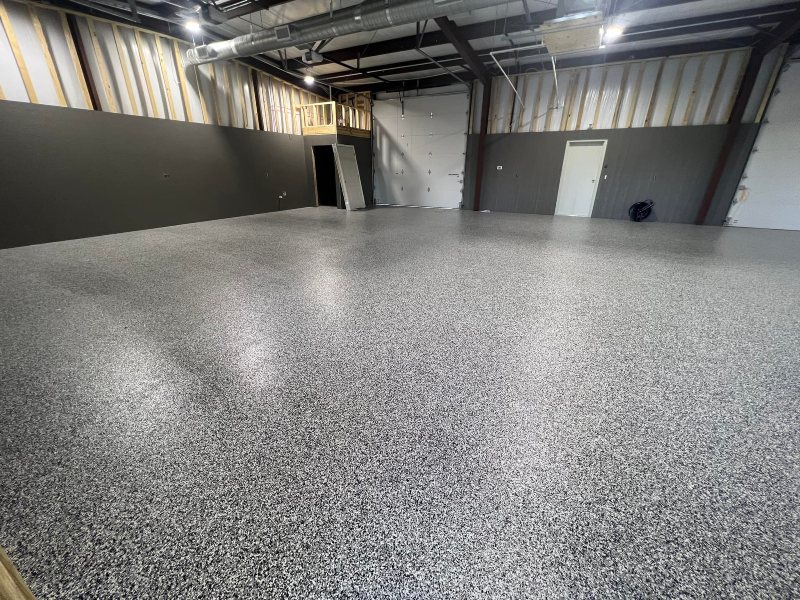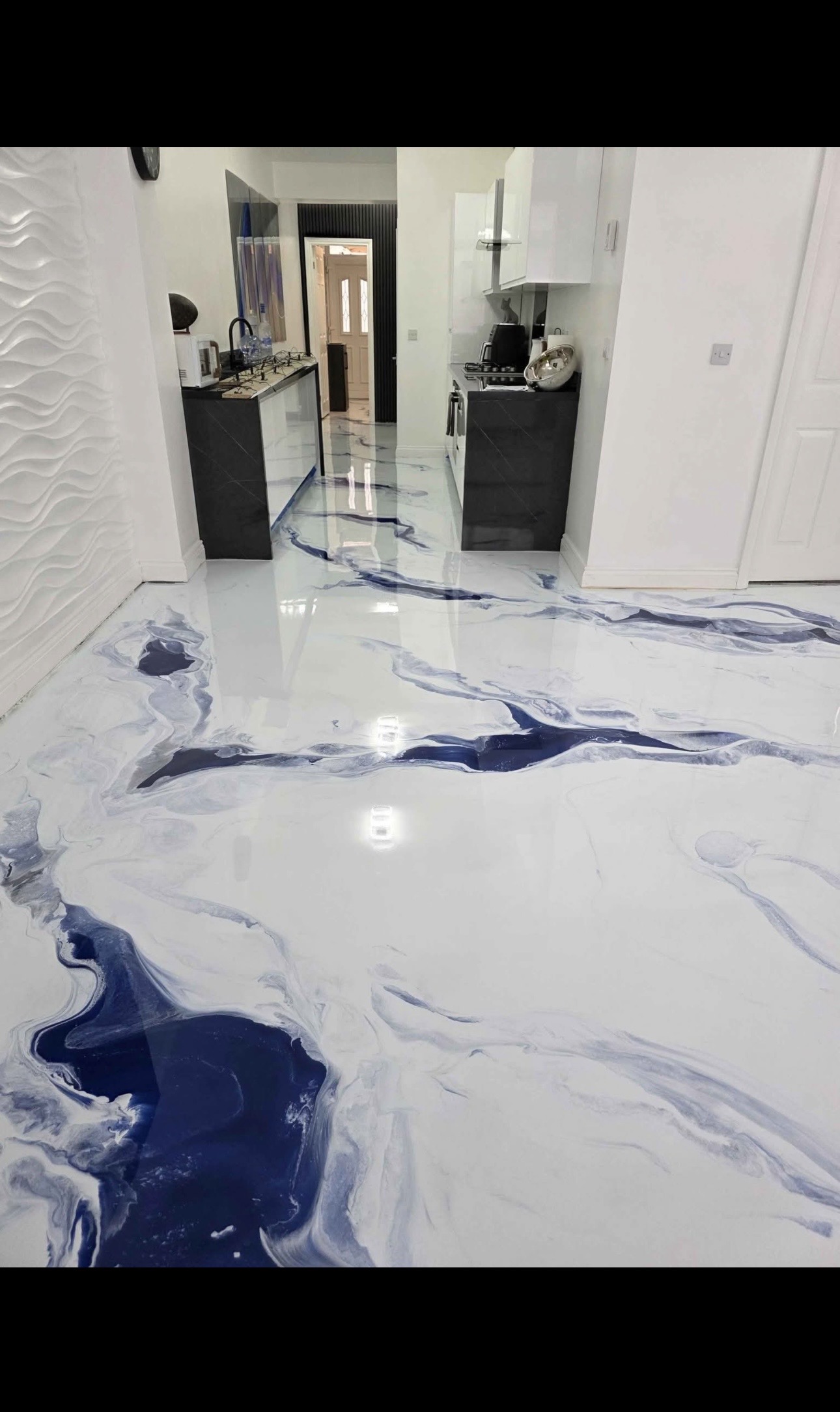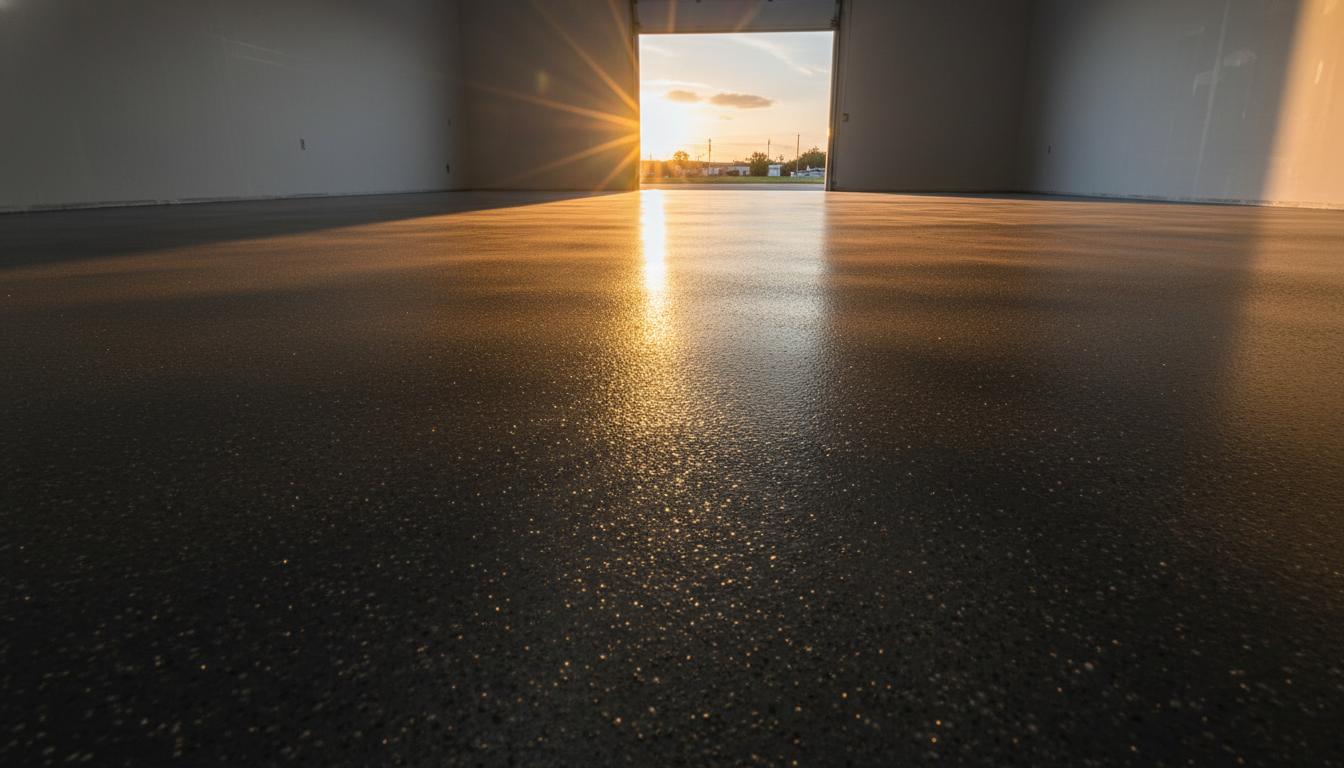
Your plant floor is the hardest-working surface in the entire building. Forklift traffic, dropped tooling, chemical spills, hot-tire pickup, and freeze-thaw at the loading dock all hammer the slab every single shift. Most facility managers only think about the floor once it has already started to dust, crack, or delaminate — and by then a shutdown is unavoidable. Choosing the right industrial epoxy system before that happens is one of the highest-return maintenance decisions a GTA operation can make, protecting your equipment, your safety record, and your production schedule.
Key Takeaways
Industrial epoxy is priced by system, not paint: Expect $7 to $16 per square foot installed in the GTA depending on thickness, with high-build and chemical-resistant systems landing at the top of that range. The cheapest quote almost always skips the prep that makes the floor last.
Surface prep is 70% of the job: Diamond grinding or shot-blasting to a proper CSP profile is non-negotiable. Inadequate preparation is the number-one cause of industrial coating failure, and no resin chemistry can compensate for a contaminated or unprofiled slab.
Downtime is shorter than most managers assume: A polyaspartic or hybrid topcoat can return a bay to foot traffic in 12 to 24 hours and full forklift loading in 48 to 72 hours, letting you phase the work around production.
Match the system to the hazard: A dry assembly area, a wet food-processing line, and a battery-charging room each need a different build, slip rating, and chemical package. One generic floor for the whole plant is a false economy.
A proper industrial floor lasts 10 to 20 years: When installed over a sound, moisture-tested slab with the correct mil thickness, an industrial epoxy system delivers a decade or more of service with only routine cleaning — far cheaper per year than repeated re-coats.
Quick-Start Prioritization Framework
| System | Best For | Typical Build | Return to Service |
|---|---|---|---|
| Standard Epoxy Coating | Light assembly, dry storage, showrooms | 10–20 mil | 48–72 hrs |
| High-Build Epoxy | Forklift traffic, warehouses, manufacturing | 30–60 mil | 72 hrs |
| Epoxy Mortar System | Heavy impact, machine shops, loading docks | 1/8–1/4 inch | 72 hrs |
| Chemical-Resistant (Novolac) | Plating, battery rooms, chemical handling | 20–40 mil | 72 hrs |
| Epoxy + Polyaspartic Topcoat | Fast turnaround, UV-exposed, best all-around | Multi-coat | 12–24 hrs |
Start here if you're:
- Running forklifts all day: A high-build epoxy or epoxy mortar system — thickness is what survives wheel load and point impact.
- Handling chemicals or wash-down: A novolac chemical-resistant system with an integral cove base to stop liquids reaching the slab edge.
- Phasing work around production: An epoxy base with a polyaspartic topcoat — fastest cure, lets you hand a bay back overnight.
What Industrial Epoxy Flooring Actually Is
Industrial epoxy flooring is a resin system applied in multiple coats over a prepared concrete slab to create a single bonded surface that is far harder and more chemical-resistant than the concrete underneath. It is engineered for abuse, not appearance alone.
Coating vs. a True System
A thin "coating" is a single roll-applied layer measured in mils. A "system" is a built-up assembly — primer, base coat, optional aggregate broadcast, and topcoat — engineered for a specific load and hazard. Industrial environments almost always need a system, not a coating, because point loads and chemical exposure will find any weak single layer and lift it.
Why Concrete Alone Fails
Bare concrete is porous and chemically reactive. Oils soak in and become impossible to clean, salt and acids etch the surface, and the constant abrasion of traffic releases fine dust that contaminates products and equipment. An epoxy system seals the slab, eliminates dusting, and gives you a surface you can actually keep clean to a hygiene standard.
What Industrial Epoxy Flooring Costs in the GTA
Pricing is driven by the system you need and the condition of the slab you start with, not by floor area alone.
The Real Per-Square-Foot Ranges
For Greater Toronto Area facilities, standard industrial epoxy coatings typically run $7 to $10 per square foot installed. High-build and mortar systems for heavy traffic land between $10 and $16 per square foot, and specialized chemical-resistant or anti-static systems can exceed that where the environment demands it. These figures include professional surface preparation, which is exactly where bargain quotes cut corners.
What Drives the Final Number
Slab condition is the biggest variable. A floor with oil saturation, old failing coatings, large cracks, or moisture problems needs remediation before a single coat goes down. Other cost drivers include the required mil thickness, integral cove bases, line striping for safety lanes, anti-slip aggregate, and whether the work must happen on nights or weekends to avoid shutting down production.
Why the Cheapest Quote Costs More
A contractor who quotes well below the range is almost always planning to skip grinding, skip moisture testing, or apply a thinner build than your traffic requires. That floor may look perfect on day one and start peeling within a year — at which point you pay for full removal and re-installation on top of the production you lose. The lowest bid is frequently the most expensive floor you will ever buy.
Why Surface Preparation Determines Everything
No part of an industrial floor matters more than what happens before the resin is opened.
Diamond Grinding and Shot-Blasting
Mechanical preparation opens the concrete surface to a measurable profile so the epoxy can grip mechanically, not just sit on top. Diamond grinding suits most facilities; shot-blasting is used on large or heavily contaminated slabs to create a deeper profile fast. Acid etching, by contrast, is unreliable on dense industrial slabs and should be treated as a red flag if a contractor proposes it as their only prep.
Moisture Testing Is Non-Negotiable
Concrete on grade can push water vapour up through the slab, and that vapour pressure will lift even a perfectly applied coating. A professional installer performs a calcium chloride or relative-humidity test before quoting a topcoat and specs a moisture-mitigating primer when readings are high. Skipping this step is the single most common reason industrial floors delaminate.
Matching the System to Your Operation
The right floor is the one engineered for what actually happens in each area of your building.
Warehousing and Forklift Traffic
High-build epoxy with a tough topcoat handles constant wheel load and resists hot-tire pickup. Safety-lane striping and durable line marking can be integrated directly into the system so they never wear off like surface tape.
Food, Beverage and Wet Processing
These environments need a seamless, sloped, easily sanitized surface with integral cove bases and an anti-slip profile for wet conditions. Self-leveling and mortar systems prevent the dust and bacterial harbourage that bare or cracked concrete invites.
Chemical, Plating and Battery Areas
Where acids, solvents, or battery electrolyte are present, a novolac chemical-resistant system protects the slab from attack that would destroy a standard epoxy. Containment detailing at the perimeter keeps spills off the structural concrete.
Minimizing Downtime During Installation
A well-run industrial install is planned around your production calendar, not the other way around.
Phasing and Fast-Cure Topcoats
Most facilities cannot shut down entirely, so the work is phased bay by bay. Polyaspartic and hybrid topcoats cure fast enough to return a section to foot traffic in 12 to 24 hours and to full loading in 48 to 72 hours, which keeps the rest of the plant running while one area is coated.
What to Confirm Before the Crew Arrives
Clear the area, plan power and ventilation, and get the full schedule — including cure milestones — in writing. A professional contractor walks the site, identifies contamination and moisture risks up front, and gives you a realistic phasing plan rather than a single optimistic shutdown window.
Safety, Compliance and Line Marking
An industrial floor is also a safety system, and a good coating package builds that in rather than bolting it on afterward.
Anti-Slip and Wet-Area Protection
Aggregate broadcast into the topcoat raises the slip-resistance of wash-down zones, ramps, and loading areas to the level your operation and insurer expect. Because the aggregate is locked into the resin rather than painted on top, it does not wear away under traffic the way surface treatments do, which keeps your safety rating consistent for years.
Durable Line Striping and Zoning
Forklift lanes, pedestrian walkways, hazard zones, and equipment footprints can be coated directly into the floor system. Integrated striping survives wheel traffic and cleaning far longer than tape or surface paint, so your facility stays clearly and compliantly zoned without constant remarking.
Static Control Where It Matters
Electronics assembly, certain chemical areas, and server or control rooms may require an electrostatic dissipative (ESD) system that channels static safely to ground. This is a specific build with a grounding grid, and it is worth flagging early because it changes both the system spec and the price.
Comparing Your Industrial Floor Options
Choosing well means weighing each system against the actual demands of the space rather than defaulting to the cheapest or the thickest.
Thickness vs. Budget
Thicker is not automatically better — it is better where impact and load demand it. A light assembly area is well served by a standard coating, while a die shop or a dock that takes dropped steel needs a mortar-grade build. Paying for a quarter-inch system in a low-traffic storage room wastes money, just as specifying a thin coating under forklifts wastes the whole floor.
Speed vs. Chemistry
Polyaspartic topcoats cure fastest and resist UV and yellowing, which is ideal when downtime is the constraint. Traditional epoxy and novolac systems cure more slowly but offer the deepest chemical resistance for plating lines and battery rooms. The strongest all-around answer for most plants is a hybrid — an epoxy or mortar base for toughness, finished with a polyaspartic topcoat for speed and durability.
Frequently Asked Questions
How much does industrial epoxy flooring cost per square foot in the GTA?
Most Greater Toronto Area industrial projects fall between $7 and $16 per square foot installed. Standard coatings for light-duty areas sit at the lower end, while high-build, mortar, and chemical-resistant systems for heavy traffic or hazardous environments reach the upper end. Slab condition, required thickness, and after-hours scheduling are the biggest factors that move the final price.
How long does an industrial epoxy floor last?
Installed correctly over a sound, moisture-tested slab, an industrial epoxy system lasts 10 to 20 years. Lifespan depends on the system thickness, the traffic and chemical load it faces, and whether routine cleaning is kept up. Thin single-coat applications in heavy-traffic plants fail far sooner, which is why matching the build to the use is essential.
How much production downtime does installation require?
Less than most managers expect, because the work can be phased. With fast-cure polyaspartic topcoats, a coated bay is ready for foot traffic in 12 to 24 hours and full forklift loading in 48 to 72 hours. A good contractor sequences the project so unaffected areas keep running throughout.
Can you coat an old, oil-stained, or cracked plant floor?
Yes, but only after proper remediation. Oil-saturated concrete must be degreased and ground, cracks and spalls are filled with structural repair compound, and moisture issues are mitigated with the correct primer before coating. Teams like Pure Coatings Epoxy assess slab condition on site and build that remediation into a transparent quote rather than discovering it mid-project.
What should an industrial epoxy warranty cover?
A legitimate warranty should cover adhesion failures such as peeling and delamination for a defined period and be backed by both the coating manufacturer and the installer. Ask exactly what is and is not covered, and get the cure schedule and maintenance requirements in writing, since improper cleaning can void coverage.
Ready to Spec the Right Floor?
Every plant floor is different, and the only way to price one accurately is to assess the slab, the traffic, and the hazards in person. Pure Coatings Epoxy provides free on-site assessments for industrial and warehouse facilities across the GTA, with a detailed written quote and a phasing plan built around your production schedule. Reach out today and we will help you choose a system that lasts.
Pure Coatings Epoxy
GTA Epoxy & Concrete Flooring — Est. 2024