
Your bare concrete garage floor is in a race against time, and winter is catching up fast. Your garage floor endures a lot especially in winter, when snow, road salt, and moisture can wreak havoc on its surface. Many homeowners treat the garage as an afterthought when it comes to seasonal prep, focusing on roofing, insulation, and windows while ignoring the slab underfoot. That oversight can cost thousands in repairs down the line. Investing in a quality garage floor coating before the cold arrives is one of the highest-ROI decisions you can make for your home, protecting your concrete, your safety, and your property's market value.
Key Takeaways
Winter damage is cumulative and expensive: The result of unprotected concrete exposed to road salt is a pitted, cracked, and spalled garage floor, and the damage will only get worse year after year if the concrete remains unsealed and unprotected. Act before the first snowfall.
Professional coating pays for itself: Homes with professionally coated garage floors typically see a $5,000 to $10,000 increase in perceived value, and in many markets, this represents a 60-80% recovery of the initial installation cost.
System choice drives longevity: Quality epoxy garage floors last 10 to 20+ years when properly installed and maintained, while cheap big-box store epoxy kits typically fail in 1 to 3 years because they skip the protective topcoat. Spend wisely on the right system, not the cheapest option.
Prep work determines success or failure: Inadequate surface preparation is the leading cause of epoxy floor peeling. Dirt, grease, existing coatings, or dust on the substrate create a barrier that prevents the epoxy from bonding properly. Never skip the grinding and moisture-testing steps.
Polyaspartic coatings work in cold weather: While there may be minor adjustments and slight differences in drying time, polyaspartic coating can still be applied in the winter, meaning there is no excuse to delay your project until spring.
Quick-Start Prioritization Framework
| Coating Type | Best For | Effort Level | Time to Results |
|---|---|---|---|
| Standard Epoxy | Budget-conscious homeowners, climate-controlled garages | Medium | 2-3 days cure |
| Polyaspartic | Cold-climate installs, fast turnaround, UV resistance | Low (pro install) | 1 day |
| Metallic Epoxy | Showroom aesthetics, resale appeal | High (pro only) | 2-3 days |
| Epoxy Flake | Slip resistance, high-traffic areas, families | Medium | 2 days |
| Epoxy + Polyaspartic Topcoat | Maximum durability, best all-around system | Low (pro install) | 1-2 days |
Start here if you're:
- A homeowner on a tight timeline: Polyaspartic, fastest cure, works in colder temperatures, one-day installation.
- Focused on resale value: Metallic epoxy or a premium flake system, strongest visual impact for buyers.
- Protecting against heavy salt and moisture: An epoxy basecoat with a polyaspartic topcoat — both perform best in different layers of the system. For most residential garages, the strongest system is usually an epoxy basecoat with a polyaspartic topcoat.
How Winter Destroys an Uncoated Garage Floor
Most homeowners don't realize how aggressive winter conditions are on bare concrete until the damage is already visible.
The Road Salt Problem
Millions of tons of rock salt are sprayed on roads and driveways each year to melt ice and snow, and driving in and out of your garage brings in this salt from your tires. That salt doesn't just sit on the surface. Salt reacts with moisture to open up tiny pores and micro-cracks in concrete, causing the concrete to flake, pit, and weaken over time as the freeze-thaw cycle continues.
The road salt also reacts with calcium hydroxide in the concrete to form calcium oxychloride crystals, and these crystals expand and damage the concrete. Left unchecked, the damage compounds every season.
Pro Tip: Don't wait until you see white salt stains or surface pitting to act. By that point, the chemical reaction has already weakened the slab from within. A coating applied before winter is protection; one applied after is damage control.
Freeze-Thaw Cycles and Moisture Infiltration
Winter introduces unique stresses to your garage floor: moisture accumulation from snow and ice melting can seep into the concrete, leading to cracks and weakening the surface over time, while road salt can corrode untreated concrete, causing pits and surface degradation. Water that seeps into tiny cracks can freeze and expand, enlarging cracks and leading to more extensive damage.
Concrete is a porous material, making garage floors particularly vulnerable to salt damage. As vehicles enter the garage, they carry frozen water, slush, snow, and traces of road salt. Over time, this salt accumulates on the garage floor, leading to deterioration and pitting, and the chemical reaction can result in surface deterioration including spalling and scaling.
Garage Floor Coating Options Explained
Understanding what's available, and what the differences actually mean, is the first step to making a confident purchase decision.
Epoxy: The Proven Standard
Epoxy paint is a resin polymer that has been used to protect concrete garage flooring for decades. As a general rule of thumb, epoxy works best indoors, so this chemical-resistant and slip-free surface is perfect for the garage environment, where spills and puddles can create a challenge.
Professional epoxy flooring installation costs $2 to $12 per square foot for your garage or concrete surface, including materials and labor. That broad range reflects differences in epoxy type, floor condition, and regional labor rates. Hiring a local epoxy flooring professional ensures your floor lasts 10 to 20 years with proper surface preparation and installation. Use that lifespan benchmark as your benchmark: if a contractor's quote seems low, ask what topcoat system they use.
Polyaspartic: The Cold-Climate Upgrade
Polyaspartic is a type of polyurea coating that has gained popularity for its rapid curing time and excellent durability. It is a newer technology compared to epoxy and offers several advantages, particularly in commercial and industrial settings.
For Canadian and northern US homeowners, its most valuable feature is temperature flexibility. To apply an epoxy garage floor coating, a minimum temperature of 50-55°F (10-13°C) is required, while urethane garage floor coatings require a minimum of 40°F (4°C) to be applied. That significantly restricts the times of year they can be used on garage floors located in colder climates. Polyaspartic sidesteps this problem almost entirely.
Metallic Epoxy: The Showroom Finish
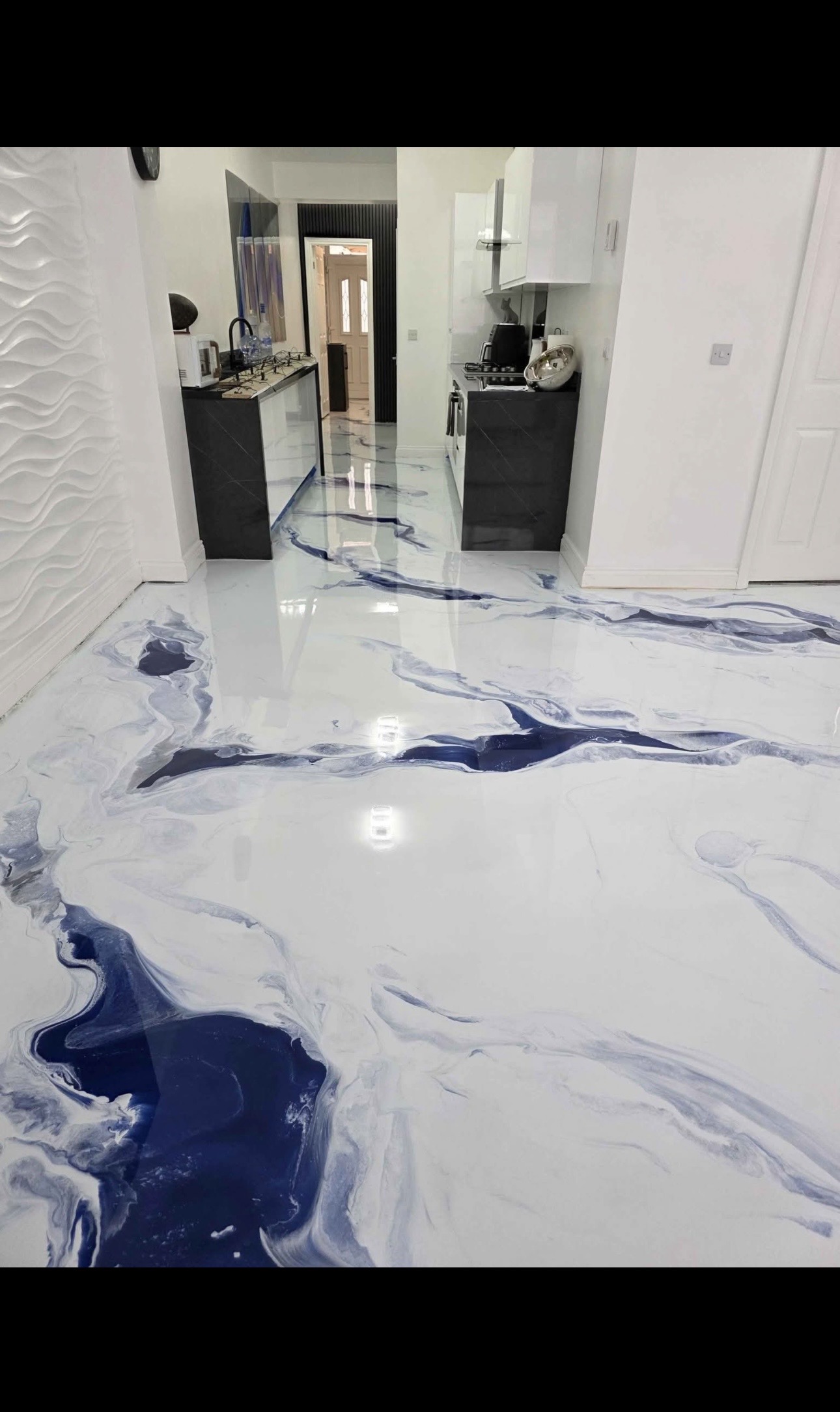
Metallic epoxy flooring is a visually striking, high-performance floor coating that blends metallic pigments with clear epoxy resin to create a 3D, marble-like finish. The pigments move and swirl during application, resulting in unique patterns that can't be replicated, making every floor one of a kind.
The metallic epoxy floor cost per square foot generally falls between $8 and $15 when installed by professionals, while DIY installations cost less, around $3 to $7 per square foot, but involve significant labor, tools, and risk of error.
Epoxy Flake Flooring: Slip Resistance + Style
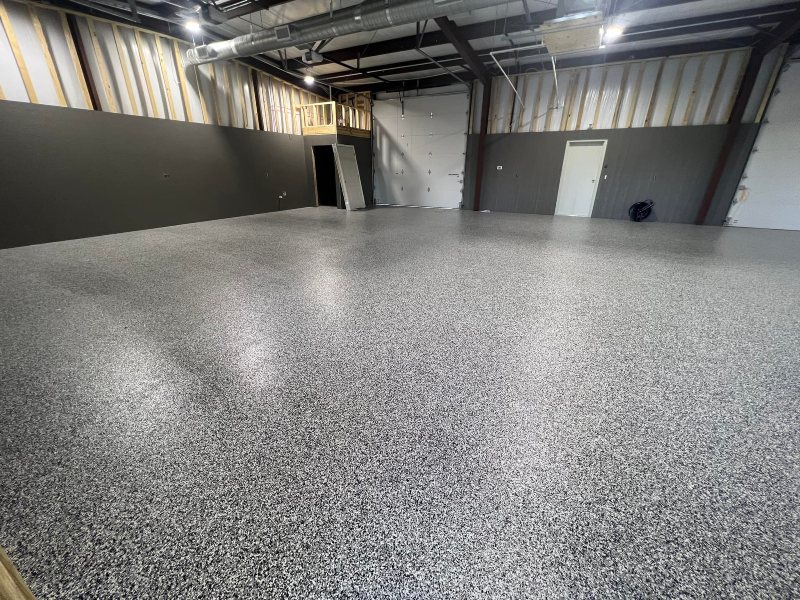
Epoxy flake flooring is the most popular choice for family garages in winter climates. Safety is always in style, and textured finishes like flake or quartz add both style and safety to your garage, making it easy to customize without sacrificing function. Flake epoxy flooring incorporates decorative flakes into the epoxy, offering a textured, slip-resistant surface, with the cost for flake epoxy ranging from $5 to $10 per square foot.

The True Cost of Epoxy Garage Flooring
Getting the pricing right means understanding all the variables, not just the headline cost per square foot.
What Drives the Final Price
The average cost for an epoxy garage floor ranges between $3 to $12 per square foot, depending on the complexity of the installation and the type of epoxy used. For a standard two-car garage (400-450 sq. ft.), a basic DIY epoxy kit runs $200-$400 (though these box-store solutions often fail within 1-2 years), professional epoxy coating runs $1,200-$2,400, and premium polyurea systems run $2,000-$4,800.
In my experience, the real calculation is annual cost, not total cost. A $300 DIY kit that fails in 18 months actually costs $200 per year. A $2,500 professional installation lasting 15+ years costs just $167 annually while delivering superior performance throughout. The professional system wins by a wide margin when you do the math honestly.
Pro Tip: When comparing quotes, always ask whether the price includes diamond grinding for surface preparation. Budgeting for a garage floor coating project should account for additional costs such as surface preparation ($240-$1,200), crack repairs ($250-$800 for minor cracks), and moisture testing ($200-$500). A quote that skips these line items is often a sign of corners being cut.
Don't Overlook the Basement
Homeowners with basements should also consider epoxy basement floor cost in their planning. The same protection logic applies: moisture and salt infiltration can damage basement slabs as aggressively as garage slabs during winter. Professional coatings can increase light reflectivity by up to 300%, and in large facilities, this often leads to a 10% reduction in lighting energy costs. For basements converted into living or utility space, that energy benefit adds up year after year.
Epoxy Floor Preparation: Why It Makes or Breaks the Result
This is the section most homeowners skip in their research, and it's the one that matters most.
The Diamond Grinding Requirement
Grinding creates an open, porous concrete surface so the epoxy can bond mechanically. This step cannot be replaced with a mop and a bucket of acid. The ultimate secret to a successful epoxy garage floor is not the application, but meticulous surface preparation. By avoiding the critical mistake of skipping a moisture check and proper mechanical profiling with a floor grinder, you prevent devastating epoxy resin failures such as hot-tire pickup and peeling.
Moisture Testing Is Non-Negotiable
High moisture is one of the leading causes of epoxy failure, so never skip this step. The science behind it is straightforward: concrete holds moisture internally, and when vapor pressure builds up beneath a sealed coating, it pushes upward. The epoxy can't go anywhere, so it blisters, then bubbles, then peels.
Why Epoxy Garage Floor Peeling Happens
The primary cause of DIY epoxy floor peeling involves inadequate surface preparation that prevents proper adhesion between coating and concrete. Concrete surfaces contain a weak layer called laitance, a powdery residue of cement particles that must be completely removed through diamond grinding to expose the aggregate and create the rough profile necessary for epoxy bonding. DIY kits recommend acid etching, but this process rarely removes enough surface contamination or creates sufficient profile depth for durable adhesion.
Teams like Pure Coatings Epoxy invest in professional-grade diamond grinding equipment for every installation precisely because this step is the foundation of a lasting floor. A homeowner asking "why is my epoxy floor peeling?" almost always had prep work that was rushed or skipped.
Pro Tip: Before committing to any installer, ask to see their surface prep process in writing. Reputable contractors like Pure Coatings Epoxy will detail the grinding, moisture testing, crack repair, and primer steps before any coating is applied.

Polyaspartic vs. Epoxy: Which Wins for Winter?
This comparison comes up in almost every pre-winter coating conversation.
Curing Time and Temperature
Polyaspartic coatings cure quickly, typically within 24 hours depending on conditions, allowing for much faster installation than traditional epoxy. Epoxy, by contrast, requires controlled temperature and extended cure windows that cold weather disrupts. No matter if the weather is freezing cold or blazing hot, a polyaspartic coating provides you with the same high-quality garage flooring surface quality.
UV Stability and Color Retention
Polyaspartic maintains its color beautifully and won't fade or yellow over time, even with regular sun exposure. Epoxy, on the other hand, tends to develop an amber tone or discolor after years of UV exposure. If you want that fresh, glossy look to last, polyaspartic has the edge.
Long-Term Cost Comparison
When you factor in polyaspartic's longer lifespan and reduced maintenance needs, it can actually be more economical in the long run. You might pay more today, but you won't be re-coating your garage floor again in five years. The best garage floor coating system is not "epoxy vs. polyaspartic"; it is using each material where it performs best.
Epoxy Floor Maintenance: Keeping Your Investment Looking New
A properly coated floor requires very little upkeep, which is one of its strongest selling points.
Routine Cleaning
The best way to clean epoxy floors is by using a gentle mixture of ammonia and water, along with a soft mop. This simple method removes dirt and grime without scratching or dulling the glossy finish, keeping your epoxy floor looking bright and new.
When cleaning your epoxy floors avoid using citrus cleaners or vinegar as they contain acids that can degloss the finish of your epoxy floor coatings. Also avoid using soap-based cleaners as they can leave streak marks or a residue on your epoxy coating surface.
What to Avoid
Ensure the safety and maintenance of your epoxy flooring by selecting mild, non-abrasive cleaners specifically formulated for epoxy surfaces. Steer clear of powerful chemicals that can damage the epoxy compound or dull the glossy sheen. Skip soap-based detergents as they can leave a filmy residue and lower the slip resistance and sheen of the floor.
In my experience, the homeowners who get the most years out of their coating are those who sweep regularly and address spills immediately; it takes less than five minutes and it's the single most effective maintenance practice you can adopt.
Frequently Asked Questions
How much does a garage floor coating typically cost?
Professional epoxy garage floor coatings cost between $4 to $10 per square foot, and most projects run $1,000 to $3,000. Polyaspartic and premium multi-layer systems run higher. The final price depends on floor size, existing condition, coating type, and regional labor rates. Always get at least two quotes that include surface preparation in the scope.
Can you apply a garage floor coating in winter?
Yes, with the right product. Polyaspartic floor coating can be flexible and versatile in terms of when it can be used. While there may be minor adjustments and slight differences in drying time, polyaspartic coating can still be applied in the winter. Standard epoxy requires warmer minimum temperatures, so timing matters if that's your chosen system.
How long does an epoxy garage floor last?
Under normal conditions and with proper installation, epoxy flooring can last anywhere from 10 to 20 years or more. Polyaspartic coatings cure quickly, are UV-stable, and last 20 to 30+ years. The biggest variable is product quality and surface preparation, not the product category itself.
Why is my epoxy floor peeling, and can it be fixed?
Epoxy can peel over time, but this usually happens when the floor was poorly prepared, moisture was ignored, or low-grade materials were used. Minor peeling can sometimes be spot-repaired, but widespread delamination typically requires full removal and reapplication. What starts as a 6-inch peeling spot becomes a 6-foot section within months. Early intervention through complete removal costs less than waiting until the entire floor has failed.
Does garage floor coating add value to a home?
Homes with epoxy-coated garage floors often see a 5-10% increase in resale value, as potential buyers appreciate the durability, aesthetics, and low maintenance that epoxy floors offer, making it a smart investment for homeowners. Homes with epoxy floors attract 20-25% more buyers in competitive markets. If you plan to sell within the next decade, coating the garage before winter is one of the few home improvements that pays for itself twice, once in daily use, and again at resale.
Final Word
The window to coat your garage floor before winter closes faster than most homeowners expect. Once temperatures drop and salt season begins, your bare concrete starts losing the battle. A quality garage floor coating, whether standard epoxy, epoxy flake flooring, metallic epoxy, or a polyaspartic system, protects your slab, simplifies cleaning, improves safety, and adds measurable value to your home. The cost is reasonable, the lifespan is long, and the alternative (concrete repair) costs more.
If you're in Canada or the northern US and want a professional assessment before committing, the team at Pure Coatings Epoxy offers expert guidance on the right system for your climate, your budget, and your timeline, with proper preparation built into every project from the start.
Pure Coatings Epoxy
GTA Epoxy & Concrete Flooring — Est. 2024